Inside the Glittering Chaos: The Story of Studio 54

The Art of the Velvet Rope
Co-owner Steve Rubell famously handpicked the crowd outside the club, creating an exclusive and highly selective entry process. Celebrities, artists, and drag queens were waved inside, while thousands of others were left waiting on the sidewalk. This strict door policy only fueled the public's obsession with gaining entry to the inner sanctum.

Brooke and Andy
Teen icon Brooke Shields and pop art pioneer Andy Warhol were frequent guests, representing the club's cross-generational appeal. Warhol loved the venue's vibrant, unpredictable energy and often used it as a social hub for his creative circle. Their interactions captured the unique mix of youth culture and high art that defined the venue.

Warhol's Playground
Andy Warhol famously remarked that Studio 54 was a dictatorship at the door but a democracy on the dance floor. Inside, social barriers dissolved as elite socialites danced alongside everyday New Yorkers who managed to pass the door test. It was a place where artistic expression and fame collided in spectacular fashion.

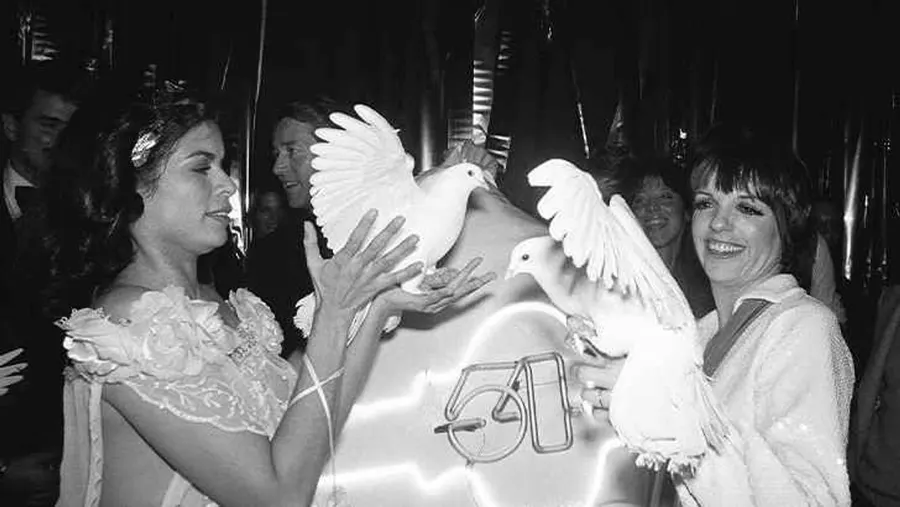
Liza and Bianca
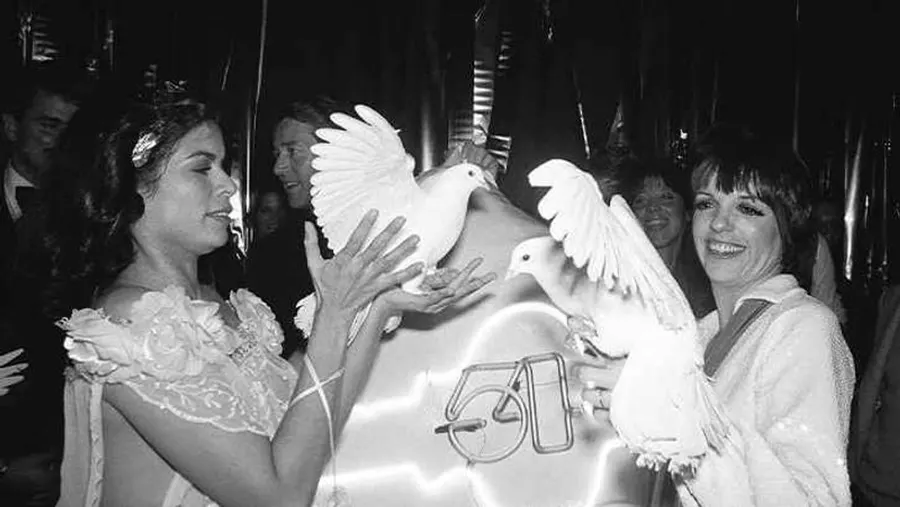
Liza Minnelli and Bianca Jagger were among the club's most celebrated regulars, often participating in elaborate, staged spectacles. On one famous night, the duo released white doves into the crowd, adding to the theatrical and dreamlike atmosphere of the venue. Such unscripted moments solidified the club's reputation for unmatched glamour.

Unmatched Spectacle
The club's design allowed for rapid set changes, borrowing techniques from its history as a theatrical stage. From falling artificial snow to elaborate light shows, the venue constantly reinvented its interior to surprise its patrons. This dedication to visual drama made every night feel like a once-in-a-lifetime event.
Pop Meets Rock
A young Michael Jackson and Aerosmith frontman Steven Tyler were photographed together at the club, showcasing the diverse musical styles represented under one roof. Studio 54 served as a neutral ground where artists from completely different genres could unwind and socialize. This photograph captures a rare moment of camaraderie between two future music legends.
A Musical Melting Pot
Disco was the beating heart of the venue, but the crowd itself was a melting pot of rock, soul, and pop royalty. Musicians frequently visited after performing their own concerts elsewhere in the city, keeping the party going until dawn. The club's DJs played a critical role in breaking new records and shaping the sound of late 70s dance music.

Theatrical Magic
Co-founders Steve Rubell and Ian Schrager spent hundreds of thousands of dollars to outfit the former theater with state-of-the-art sound and lighting. Aerial rigs, moving light bridges, and the famous 'Man in the Moon' ceiling sculpture created an immersive sensory experience. This high-tech environment set a new standard for modern nightclub design worldwide.

Cultural Liberation
Studio 54 flourished during a unique window of social and sexual liberation in late-1970s America. The club provided a safe, non-judgmental space where people of all backgrounds and orientations could express themselves freely. This atmosphere of absolute freedom became the defining ethos of the entire disco movement.

The Final Party
The original, chaotic era of the club came to an abrupt end following a federal raid for tax evasion in late 1979. Rubell and Schrager were eventually sentenced to prison, and the club was sold, marking the end of its most legendary chapter. The final night of the original owners featured a star-studded send-off that symbolized the end of an era.

A Starry Beginning
On April 26, 1977, Studio 54 officially opened its doors in a former CBS radio and television studio in Midtown Manhattan. The venue instantly transformed New York City's nightlife scene, drawing massive crowds of hopeful partygoers to West 54th Street. It became a cultural flashpoint overnight, blending theatrical design with high-energy dance music.
Featured galleries