12 Unusual Ocean Animals and the Survival Tools They Use
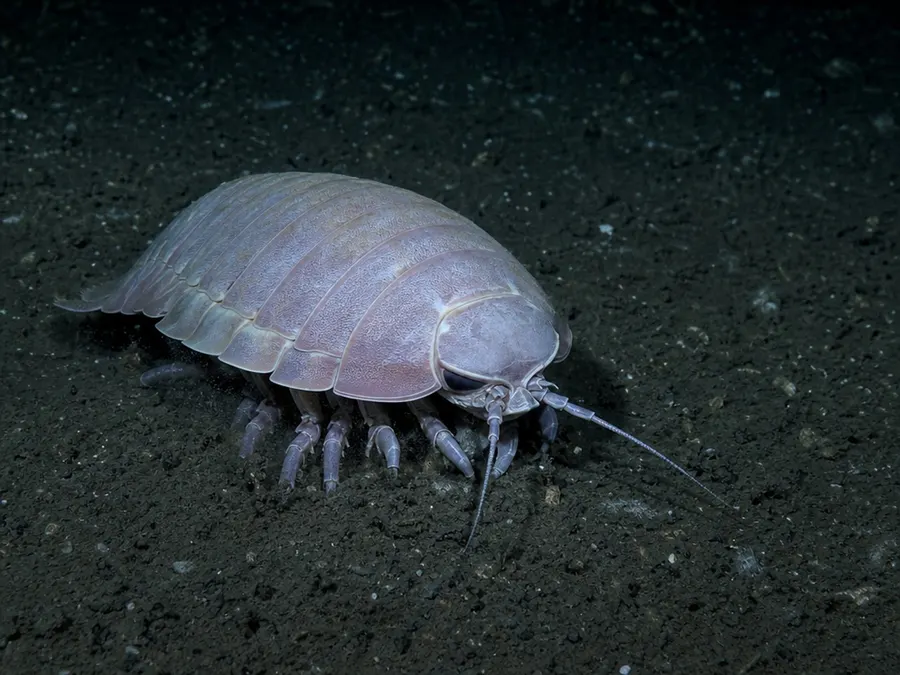
The Giant Isopod's Defensive Armor
Living on the cold, high-pressure seafloor, the giant isopod is a master scavenger. To survive in this harsh environment, it possesses a tough, segmented chitinous exoskeleton that provides protection from predators. When threatened, these creatures can roll into a tight, armored ball, shielding their softer underside from potential harm while they search for fallen organic matter.
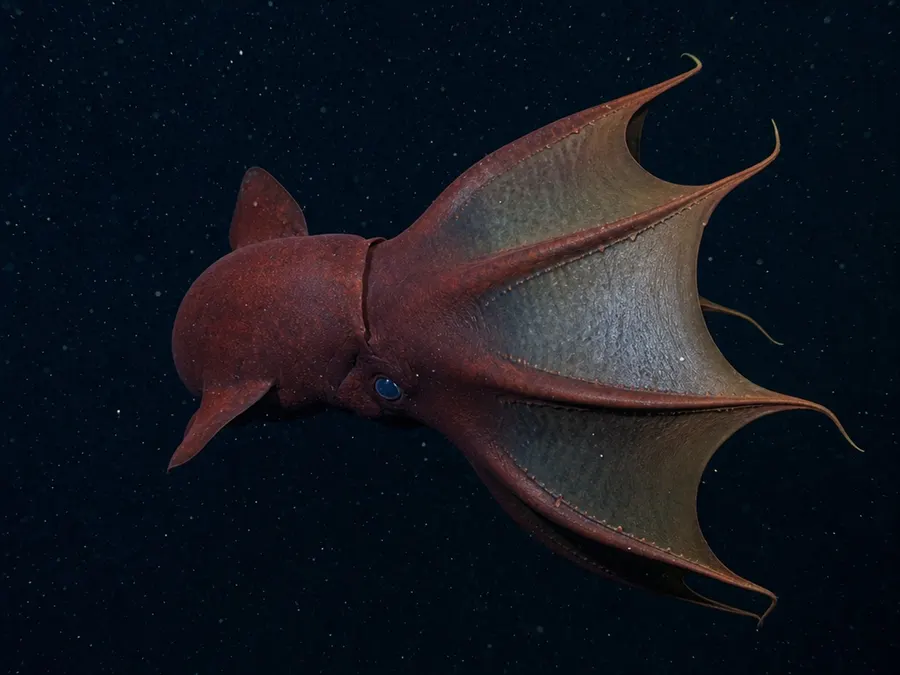
The Vampire Squid's Dark Cloak
The vampire squid navigates the oxygen minimum zones of the deep ocean using unique physical adaptations. Instead of hunting actively, it collects drifting organic debris using two thin, retractable filaments. When threatened, it can pull its dark, webbing-connected arms up over its body, exposing soft spines and hiding from predators in the pitch-black water.
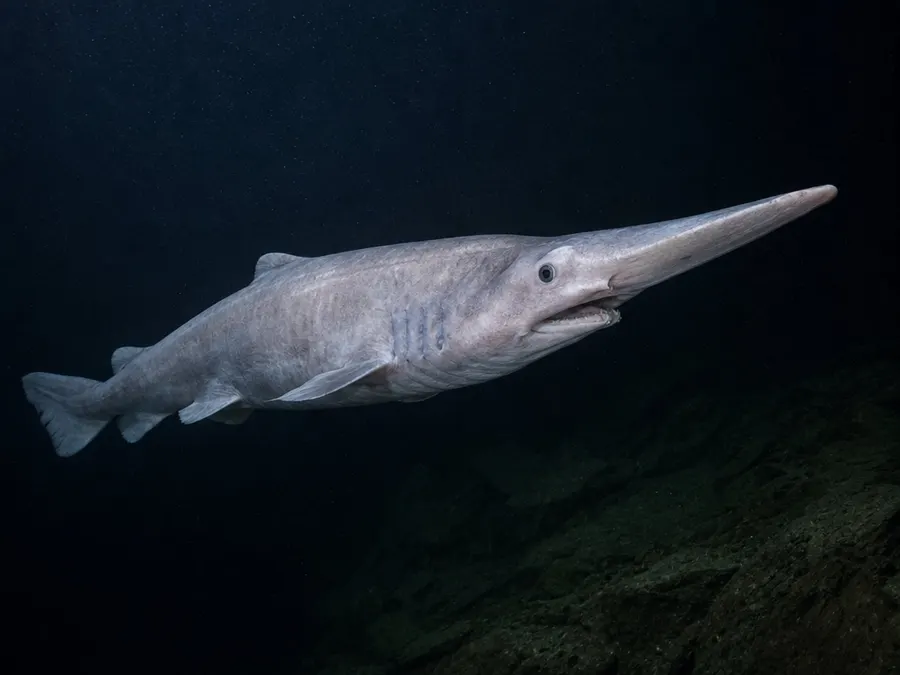
The Goblin Shark's Slingshot Jaw
The goblin shark is easily recognized by its elongated, flattened snout and highly specialized jaw mechanism. This pinkish, bottom-dwelling shark navigates deep waters where prey is scarce. When a fish or crustacean wanders near, the shark rapidly projects its entire jaw forward, capturing the prey with needle-sharp teeth before it can escape.
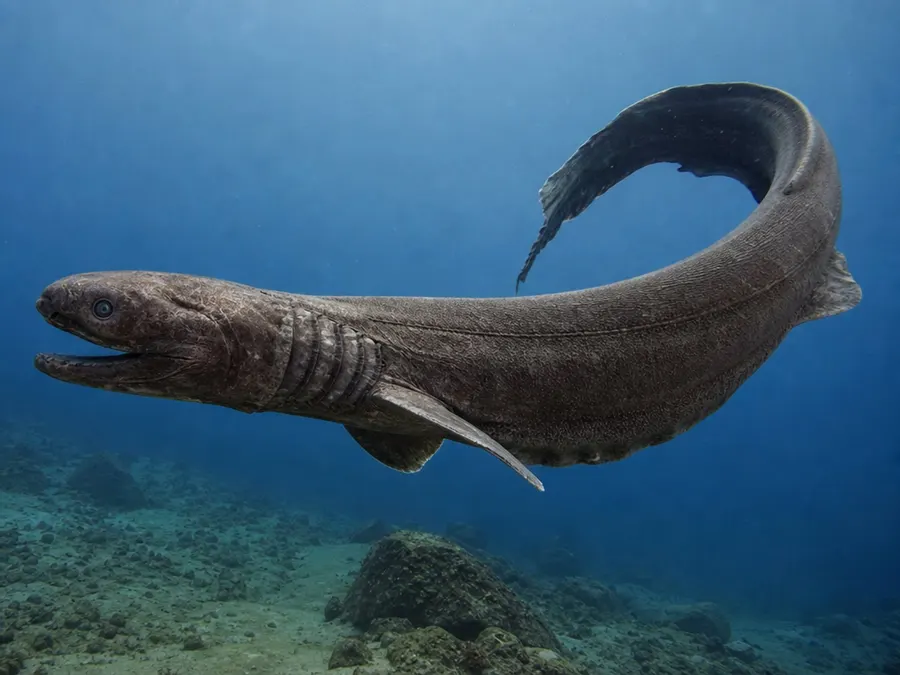
The Frilled Shark's Ancient Design
Bearing a striking resemblance to an eel, the frilled shark is a primitive species inhabiting deep continental slopes. Its name comes from the fringed appearance of its six pairs of gill slits. To capture slippery prey like squid in the dark, it relies on rows of backward-facing, three-pronged teeth that prevent its catch from slipping away.
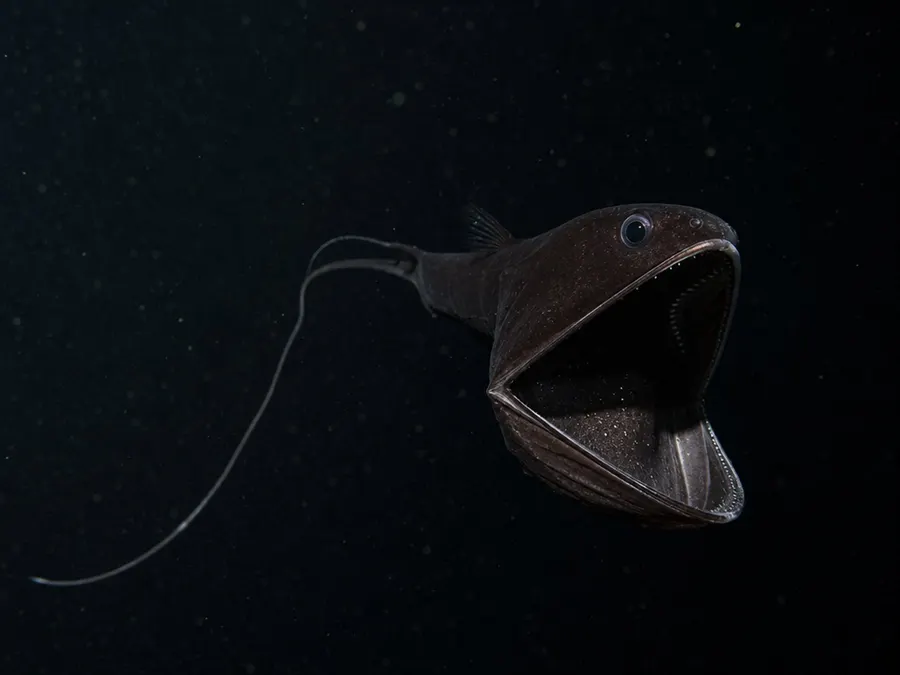
The Gulper Eel's Expanding Maw
In the vast midwaters of the deep ocean, meals are infrequent and unpredictable. The gulper eel has evolved a massive mouth that is much larger than its body, connected to a highly stretchable stomach. This allows the creature to swallow prey much larger than itself, maximizing its chances of survival when food is scarce.
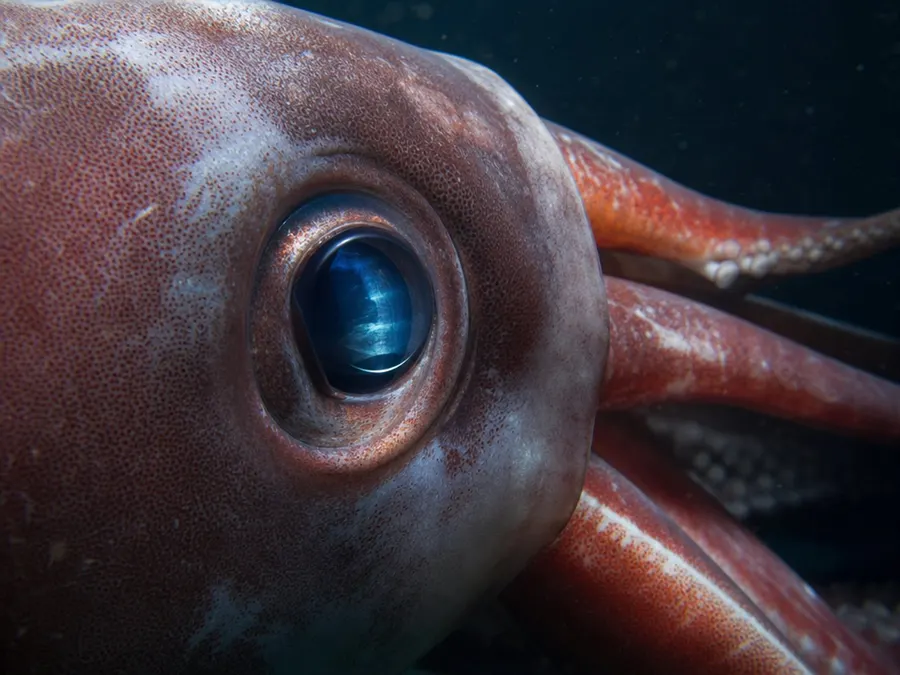
The Giant Squid's Massive Eyes
To survive in the dim twilight zone, the giant squid possesses some of the largest eyes in the animal kingdom. These dinner-plate-sized organs are designed to detect the faintest traces of light, including the bioluminescent glows of other organisms. This exceptional vision helps the squid detect predators and locate prey in near-total darkness.
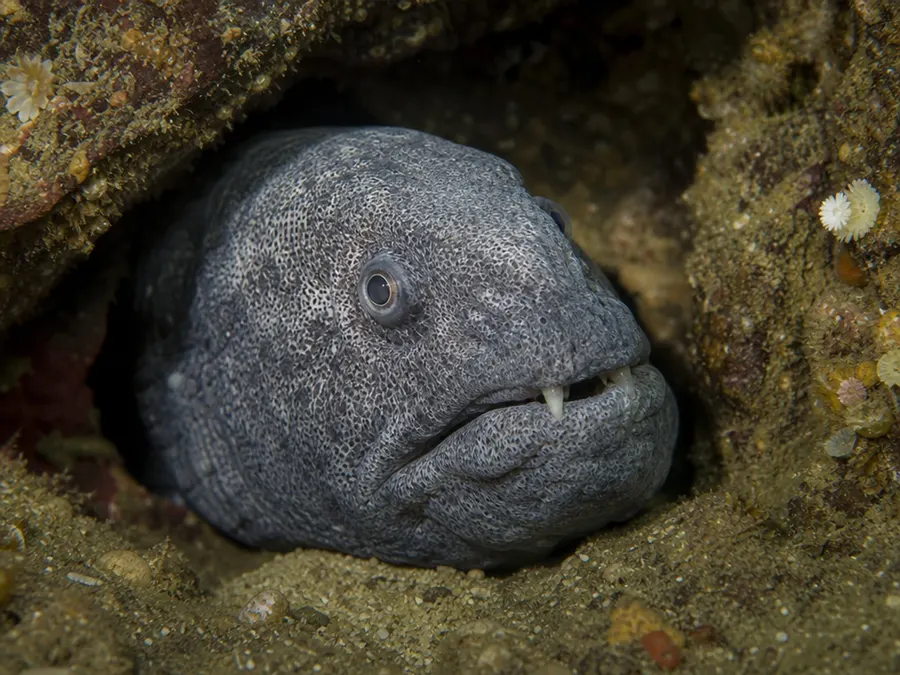
The Wolf Eel's Powerful Crush
Despite its intimidating appearance, the wolf eel is a slow-moving resident of rocky reefs and crevices. It relies on a powerful set of jaws equipped with sharp canine teeth at the front and flat molars at the back. This specialized dentition allows it to easily crush the hard shells of crabs, sea urchins, and clams.
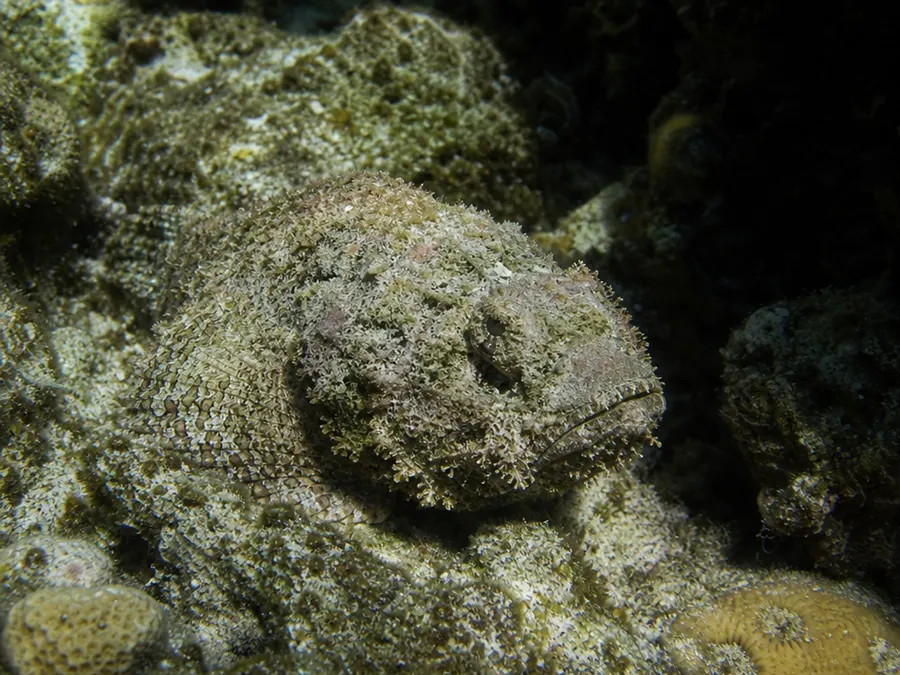
The Stonefish's Perfect Disguise
Survival on the shallow seafloor often requires blending in seamlessly with the environment. The stonefish excels at camouflage, possessing a rough, textured skin that mimics the appearance of coral debris or a mud-covered rock. This allows it to remain completely invisible to unsuspecting prey and potential predators alike as it waits motionless.
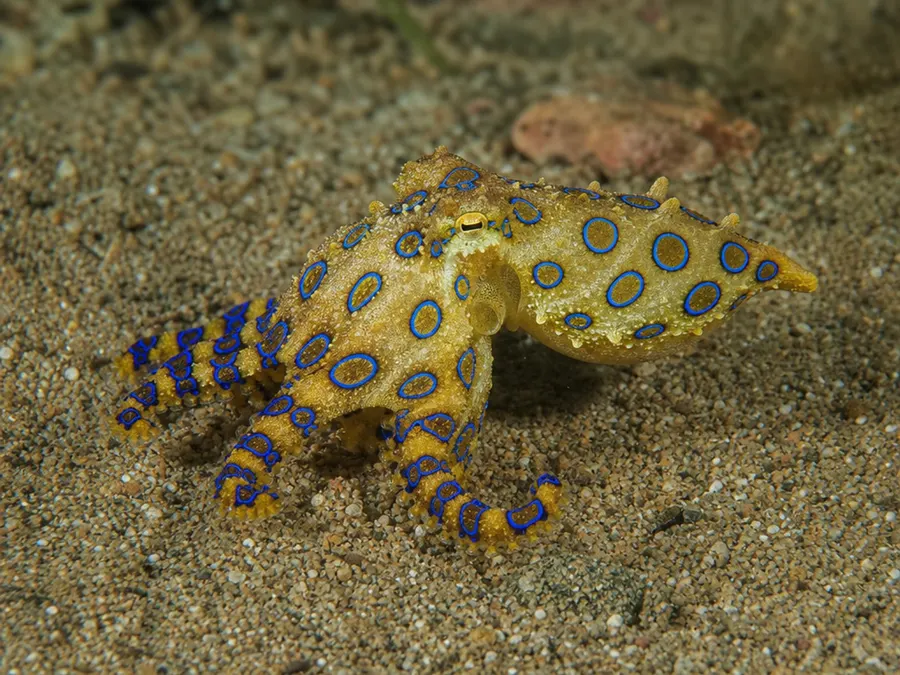
The Blue-Ringed Octopus's Bright Warning
While many cephalopods use camouflage to hide, the blue-ringed octopus employs a different survival strategy. When threatened, its relatively dull body flashes bright, iridescent blue rings across its skin. This dramatic color shift serves as an honest warning to potential predators that the tiny octopus possesses highly potent defensive toxins, discouraging any attacks.
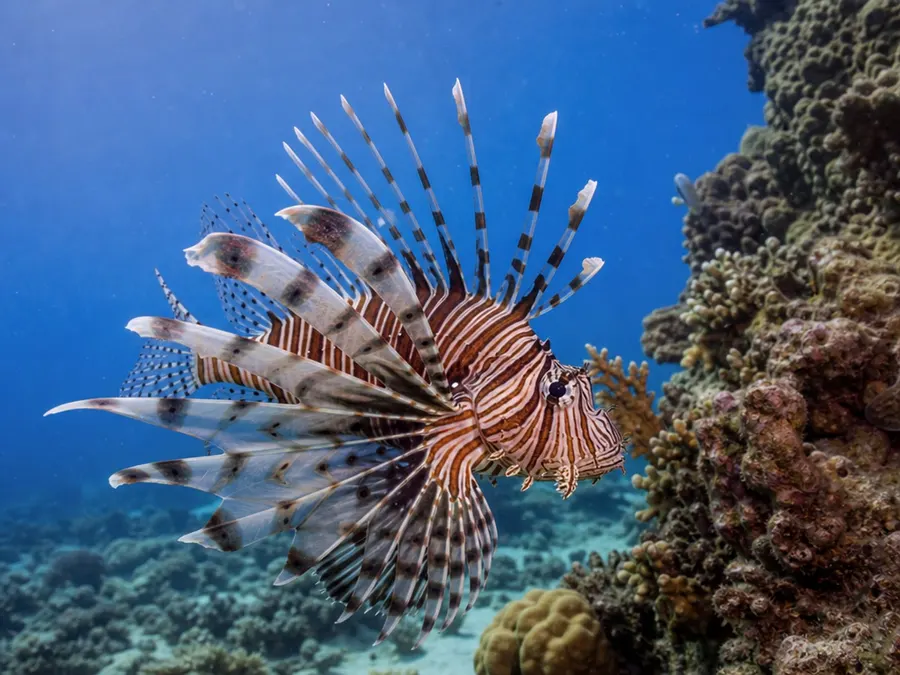
The Lionfish's Defensive Fan
The lionfish uses its dramatic appearance as an active defense mechanism. Its body is adorned with long, elegant pectoral fins and a series of sharp dorsal spines. These needle-like spines contain defensive toxins designed to deter predators. By flaring its fins and pointing its spines outward, the lionfish makes itself a highly unappealing target.
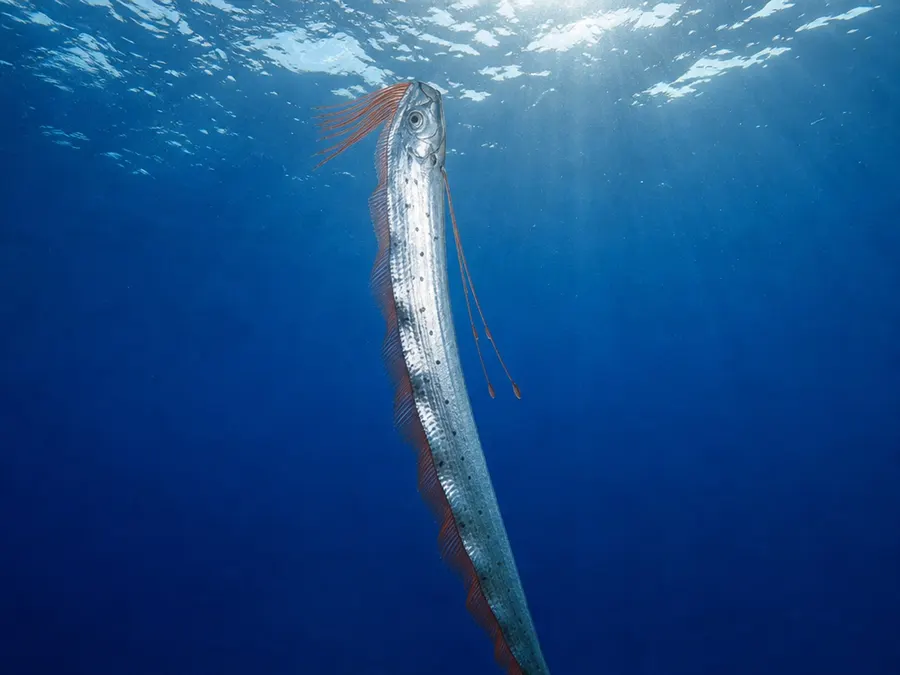
The Oarfish's Ribbon-Like Flight
The mysterious oarfish is the longest bony fish in the sea, dwelling in the deep pelagic zone. It survives by swimming in a vertical position, undulating its long, ribbon-like body to move quietly through the water columns. This unique movement, combined with its silvery skin, helps it blend into the faint downwelling light of the open ocean.
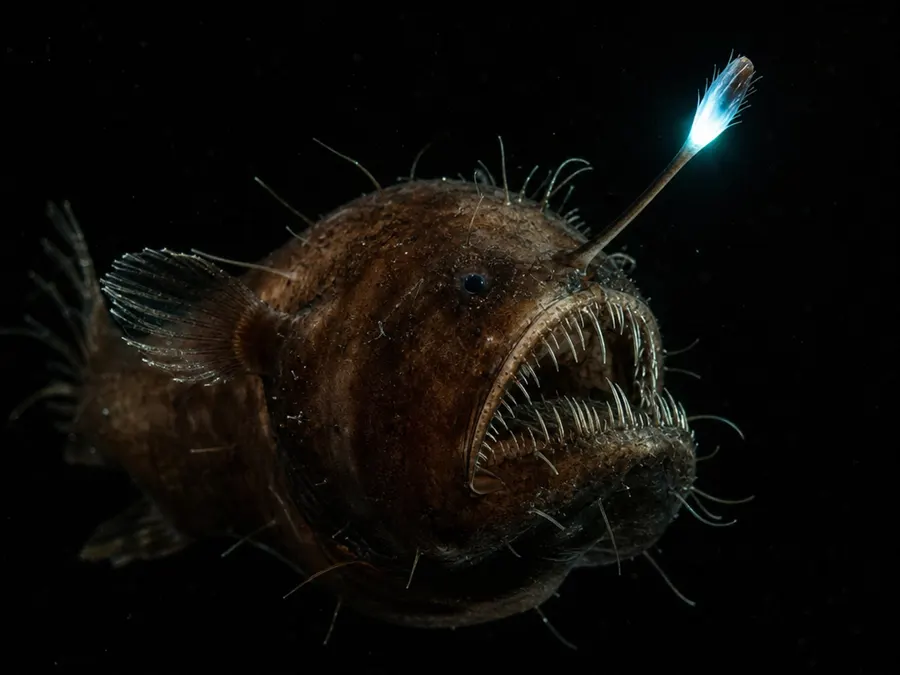
The Anglerfish's Luminous Lure
In the deep, lightless bathypelagic zone, finding food is a constant challenge. The female anglerfish addresses this with a modified dorsal spine that projects above her mouth like a fishing rod. This structure hosts bioluminescent bacteria, producing a glowing light that attracts curious prey directly toward her sharp, inward-pointing teeth in the darkness.
Featured galleries