12 Questions Before Comparing City Crime Rates

2. Reported Incidents vs. Victimization?
Crime datasets represent offenses known and reported to law enforcement, rather than all actual victimizations. The volume of crimes known to the police is heavily influenced by citizens' attitudes toward crime and their reporting practices, particularly regarding minor offenses. Additionally, a proactive law enforcement agency may identify and report more offenses through its own investigative efforts. Consequently, differences in reported crime between communities can reflect differences in policing and reporting rather than actual crime levels.

3. What is the Population Denominator?
When evaluating crime rates, it is crucial to examine the population data used in the calculation. The FBI UCR Program presents population size as a correlate of crime, but cautions against comparing jurisdictions solely on population coverage. Researchers can use U.S. Census Bureau data to better analyze a locale's population characteristics, such as age, gender, and transience. A thorough assessment of crime requires looking beyond simple population figures to understand these underlying demographic variables.
4. What is the Agency Coverage?
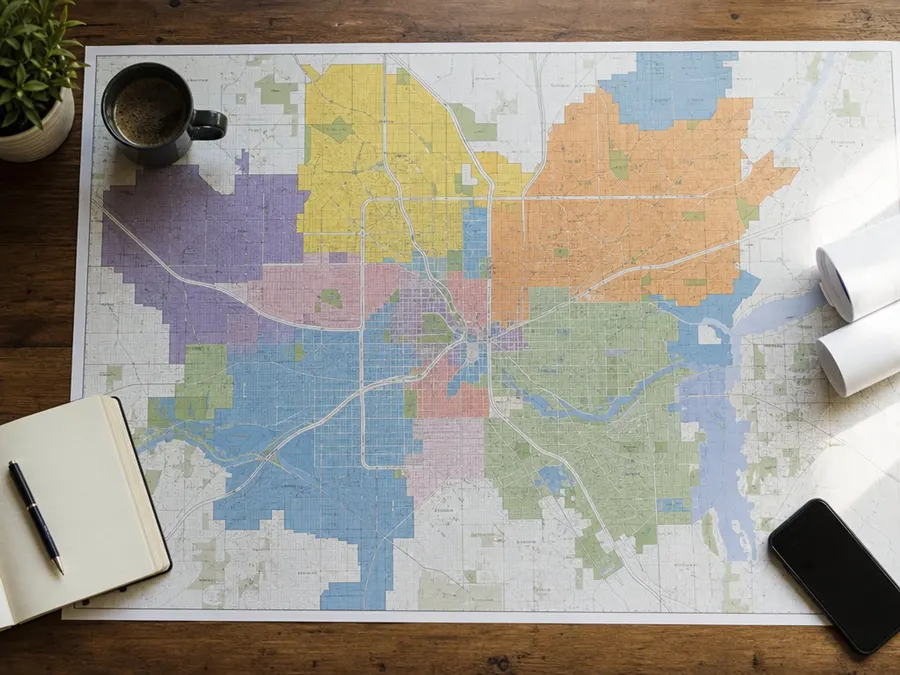
To understand the scope of a crime dataset, you must identify which specific law enforcement agencies contributed the data. The national UCR Program collects statistics from a mix of city, county, state, tribal, and federal agencies. The FBI cautions against comparing individual reporting units, such as cities, counties, or universities, solely on their population coverage or student enrollment. A complete analysis requires examining the unique local conditions and administrative boundaries of each contributing agency.

5. Are There Missing Monthly Reports?
When analyzing published crime statistics, you must consider whether the data includes all updates and monthly submissions. Participating agencies voluntarily submit crime reports, typically on a monthly basis. However, the FBI's published reports might not reflect late submissions or subsequent updates from these agencies. Consequently, figures in master files and specialized data reports may differ from the initially published annual statistics due to these late adjustments.

6. Which Reporting System is Used?
The specific reporting framework used to collect statistics can significantly alter the resulting crime counts. In the Summary Reporting System (SRS), a hierarchy rule is applied that only counts the most serious crime in incidents involving multiple offenses. In contrast, the National Incident-Based Reporting System (NIBRS) captures more detailed data without applying this hierarchy rule. Because of these structural differences, the FBI advises that NIBRS data should not be directly compared to SRS-derived publications like Crime in the United States.

7. How Does Population Stability Affect Crime?
A community's population stability is a key variable that directly affects local crime volume and types. The FBI identifies residents' mobility, commuting patterns, and transient factors as critical variables that shape a jurisdiction's crime profile. Simple crime comparisons often fail to account for these population shifts, leading to incomplete analyses. To make a meaningful assessment, researchers must examine how stable or transient a local population actually is.

8. How Do Borders Affect the Data?
Geographic factors specific to each jurisdiction must be considered to make an accurate assessment of crime. A jurisdiction's crime profile is influenced by its population density, degree of urbanization, and its economic dependence on neighboring areas. For instance, proximity to correctional facilities or military installations can significantly affect the crime reported by local law enforcement. Comparing crime rates without analyzing these unique geographic and regional relationships can lead to misleading perceptions.

9. Resident vs. Daytime Population?
Standard crime rate calculations often fail to account for the massive influx of nonresidents into a jurisdiction. A community's economic dependence on nonresidents, such as tourists, commuters, and convention attendees, can significantly affect its crime volume. These transient populations are not captured in resident census counts, which can distort per-capita crime comparisons. To properly interpret crime reports, researchers must analyze how heavily a jurisdiction relies on nonresidents and transient populations.

10. Volume vs. Per-Capita Rate?
When analyzing crime data, it is important to distinguish between the raw volume of offenses and comparisons based solely on population size. The FBI notes that population size is the only correlate of crime presented in its NIBRS publication, but cautions against comparing jurisdictions based solely on this coverage. Numerous other variables—such as economic conditions, climate, and local law enforcement strength—equally affect the volume and type of crime in an area. Responsible analysis requires looking beyond simple population-based rates to evaluate these unique local conditions.

11. How is Data Checked Over Time?
To ensure that crime statistics are reliable for comparisons, the FBI subjects UCR data to rigorous quality checks and periodic audits. The Criminal Justice Information Services Division employs auditors who conduct Quality Assurance Reviews of contributing agencies to verify compliance. Additionally, the FBI publishes preliminary reports that show the percentage change in crime from previous reporting periods. These continuous reviews and comparative reports help maintain the accuracy and reasonableness of the data over time.
12. Why Does the FBI Warn Against Rankings?
The FBI strongly cautions against using UCR data to compile rankings of cities and counties. Such rankings provide no insight into the numerous variables that shape crime in a particular jurisdiction, leading to simplistic and misleading analyses. These incomplete comparisons can create harmful perceptions that adversely affect local communities and their residents. A meaningful assessment of crime is only possible by carefully studying the unique economic, demographic, and geographic conditions of each locale.

1. How is the Offense Defined?
When comparing crime data across jurisdictions, it is important to understand how offenses are reported and classified. Participating local agencies voluntarily submit monthly crime reports, typically using uniform offense definitions, to a centralized state repository. The state Uniform Crime Reporting (UCR) program then forwards this standardized data to the FBI's national program. If a state lacks its own centralized program, local agencies submit their data directly to the FBI.
Featured galleries