12 Original Pun Signs and How Their Wordplay Works
The Towing Company Slogan
An advertising slogan for a moving company utilizes a paronomastic pun by stating, "We don't charge an arm and a leg. We want your tows." This line plays on the identical sounds of the words "tows" and "toes." It modifies a well-known idiom to reference the company's service of moving and towing belongings.

Tuning a Bass
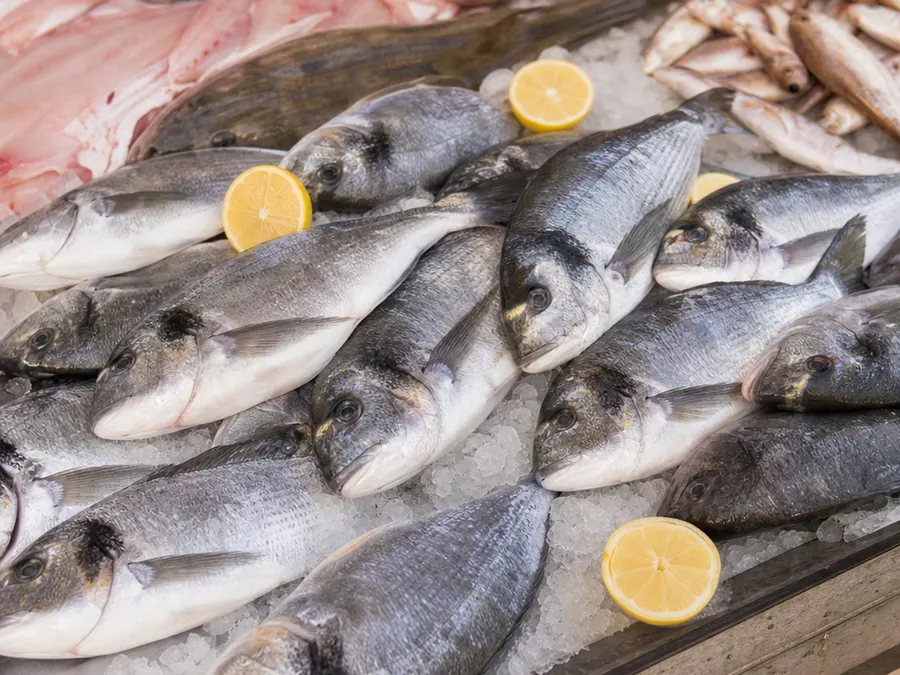
A notable line written by author Douglas Adams features a mix of homophonic and homographic wordplay. The joke states that while you can tune a guitar, you cannot "tuna fish" unless you play "bass." This plays on the identical sounds of "tune a" and "tuna," while also exploiting the spelling of "bass," which represents both a musical instrument and a type of fish.

A Non-Prophet Institution
Comedian George Carlin famously created a homophonic pun with the phrase "atheism is a non-prophet institution." This joke substitutes the word "prophet" for its identical-sounding counterpart "profit." By doing so, it humorously alters a standard, familiar phrase to deliver a rhetorical point.

Keeping Russians in Czech
A joke from the Cold War era asks why troops remained stationed in Germany, delivering the punchline: "To keep the Russians in Czech." This homophonic pun relies on the identical pronunciation of the words "check" and "Czech." The humor comes from the aural ambiguity between keeping someone under control and referring to the nation of Czechoslovakia.

Giving Peas a Chance
A pun from the animated series "Pinky and the Brain" asks whether lima beans would feel left out if we "give peas a chance." This line plays on the highly similar, though not identical, sounds of the words "peas" and "peace." It offers a humorous twist on a famous historical anti-war slogan.

Trapped in a Bad Lie
A homonymic pun compares working in politics to the sport of golf, stating that both involve being trapped in one bad "lie" after another. This joke exploits the word "lie," which is spelled and pronounced the same way for two different meanings. It refers simultaneously to a dishonest statement and the physical position where a golf ball comes to rest.
Straining at the Door
An old joke repeated by Isaac Asimov features a homonymic pun about a person who strained himself running into a screen door. The humor relies on two distinct meanings of the word "strained." It plays on the physical act of overexerting one's body versus the process of filtering something through a screen mesh.
Sandwiches in the Desert
A compound pun attributed to Richard Whately asks why a person can never starve in the desert, pointing out that they can eat the "sand which is there." The joke then explains that Noah sent Ham, whose descendants "mustered and bred." This complex line of wordplay relies on four separate puns, linking the desert sands to sandwiches, Ham to ham, mustered to mustard, and bred to bread.

The Möbius Strip Club
A compound pun asks where mathematicians spend their weekends, answering that they go to a "Möbius strip club." This joke merges two distinct concepts by sharing a common word. It simultaneously references the mathematical concept of a Möbius strip and an adult entertainment venue.

The Pi and the Pie
A recursive pun states that "π is only half a pie." In this type of wordplay, understanding the second part of the joke depends on knowing the mathematical concept in the first. It relies on the fact that pi radians equal 180 degrees, representing a half-circle, while a food pie is a complete circle.
Immanuel Kant Pun
A classic recursive pun states: "Immanuel doesn't pun, he Kant." Attributed to the writer Oscar Wilde, this joke plays on the surname of the German philosopher Immanuel Kant. The humor relies on the phonetic similarity between his last name and the English contraction "can't."
The Baker's Dough
A paronomastic pun can be found in the classic joke about a baker who was unable to make enough dough. In this wordplay, the word "dough" is used to represent both the physical mixture used for baking bread and a colloquial term for money. This dual meaning allows the punchline to deliver a humorous, unexpected twist on a common profession.
Featured galleries